All About High Volume Injection Molding
High-volume injection molding helps you manufacture large quantities of plastic parts efficiently through automated, repeatable cycles. You’ll benefit from reduced per-unit costs due to economies of scale, while maintaining consistent quality through real-time monitoring systems. The process requires specialized equipment including injection molding machines, precision-engineered molds, and material handling systems. You’ll need to carefully select appropriate materials like engineering-grade resins and implement robust quality control measures such as automated defect detection and Statistical Process Control. Through proper planning and optimization techniques, you can achieve maximum production efficiency – but there’s much more to master in this manufacturing methodology.
What Is High Volume Molding
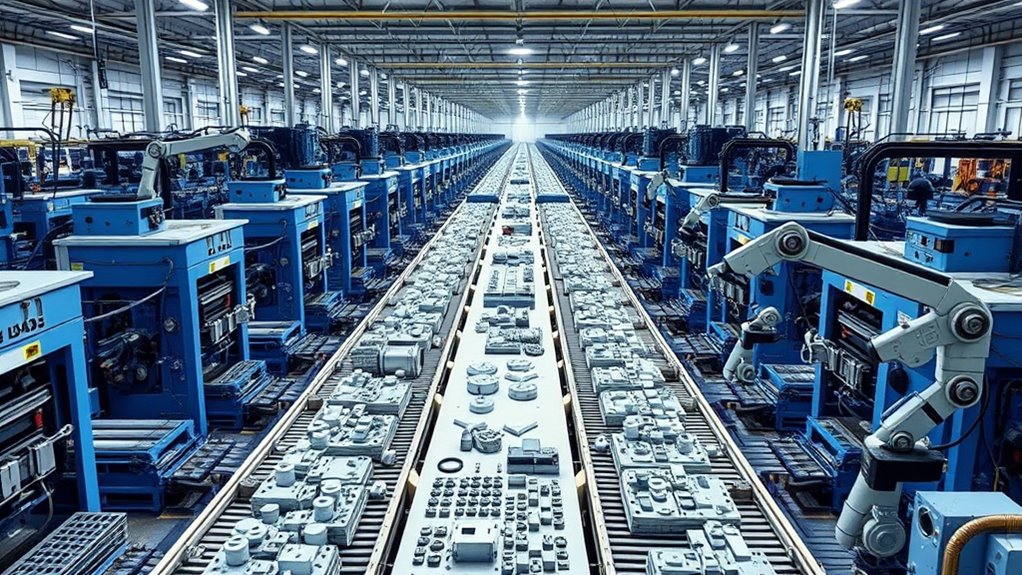
High-volume injection molding is a manufacturing process that produces large quantities of plastic parts through automated, repeatable cycles. When you’re operating at high volumes, you’ll typically manufacture thousands to millions of identical components using sophisticated molding techniques.
This process relies on precision machinery that injects molten plastic into carefully engineered molds under specific pressure and temperature conditions.
The defining characteristic of high-volume production is its efficiency in creating consistent, quality parts at accelerated rates. You’ll find that these manufacturing processes utilize advanced automation systems, robotics, and quality control measures to maintain production speed while ensuring part integrity.
The molds themselves are designed for durability, often crafted from hardened steel to withstand the rigors of continuous operation.
To achieve ideal results, you’ll need to take into account factors like material selection, cycle time optimization, and process controls.
Modern high-volume operations integrate real-time monitoring systems that track critical parameters such as injection pressure, melt temperature, and cooling time. This data-driven approach allows for immediate adjustments, minimizing defects and maximizing throughput in your production line.
Benefits and Cost Advantages of Longer Volume Molding
Cost efficiency stands as the primary advantage of longer volume injection molding, driven by economies of scale and optimized production processes. When you commit to higher volumes, you’ll benefit from reduced per-unit costs as material purchases and production runs become more efficient. Your tooling costs get amortized across a larger number of parts, considerably lowering the cost per component.
Production efficiency increases greatly with high-volume runs. You’ll experience fewer machine setups, reduced labor costs per unit, and optimized cycle times. This streamlined approach minimizes waste and maximizes resource utilization. Your manufacturing team can fine-tune processes, leading to improved quality control and consistency across production batches.
The cost reduction benefits extend beyond direct manufacturing expenses. You’ll gain leverage in material procurement, enabling bulk purchase discounts from suppliers. Your warehouse management becomes more predictable, and shipping costs decrease through consolidated deliveries.
Additionally, you can invest in automated systems and specialized equipment, knowing the longer production runs will justify the capital expenditure. These technological investments further enhance your operational efficiency and maintain your competitive edge in the market.
Essential Equipment Requirements

Three core pieces of equipment form the foundation of any high-volume injection molding operation: an industrial-grade injection molding machine, precision-engineered molds, and a robust material handling system.
You’ll need to verify your injection molding machine meets strict specifications for tonnage, shot size, and cycle times. Regular machine maintenance schedules and adherence to safety protocols are non-negotiable for maintaining peak production efficiency.
| Equipment Type | Primary Function | Maintenance Need | Safety Consideration |
|---|---|---|---|
| Injection Machine | Material processing | Weekly calibration | Emergency shutoffs |
| Mold System | Part formation | Daily cleaning | Lock-out procedures |
| Material Handler | Resin management | Monthly inspection | Dust control |
| Cooling System | Temperature regulation | Quarterly service | Pressure monitoring |
Your auxiliary equipment requirements should include advanced robotics for part removal, sophisticated cooling systems, and quality control instruments. Modern facilities typically integrate these components through centralized control systems that monitor performance metrics and maintain process stability. When selecting equipment, prioritize vendors who offer thorough technical support and can demonstrate proven reliability in high-volume applications.
Material Selection Guidelines For Long Run Jobs
Selecting appropriate materials stands as the cornerstone of successful long-run injection molding projects. When choosing materials for high-volume production, you’ll need to evaluate critical material properties like melt flow index, tensile strength, and thermal stability. These characteristics directly impact your production efficiency and final product quality.
For best results, you’ll want to examine materials that maintain consistent performance across extended production runs. Engineering-grade resins like PBT, PC, and high-performance nylons often deliver the reliability needed for continuous operations. You’ll find that these materials typically offer superior dimensional stability and resistance to wear, essential for maintaining tight tolerances throughout production cycles.
Sustainability considerations should factor prominently in your material selection process. Modern manufacturing demands environmentally conscious choices, so you’ll want to evaluate recycled content options and end-of-life recyclability.
Look for materials that process at lower temperatures to reduce energy consumption while maintaining desired properties. Additionally, explore bio-based alternatives that offer comparable performance to traditional petrochemical-based resins. These choices can greatly impact your carbon footprint while meeting production requirements.
Quality Control Measures
Once you’ve established your material parameters, rigorous quality control measures become the backbone of high-volume injection molding success.
You’ll need to implement automated defect detection systems that can rapidly assess parts during production, guaranteeing consistency across millions of units. Statistical Process Control (SPC) charts help you monitor critical dimensions and identify trends before they become problems.
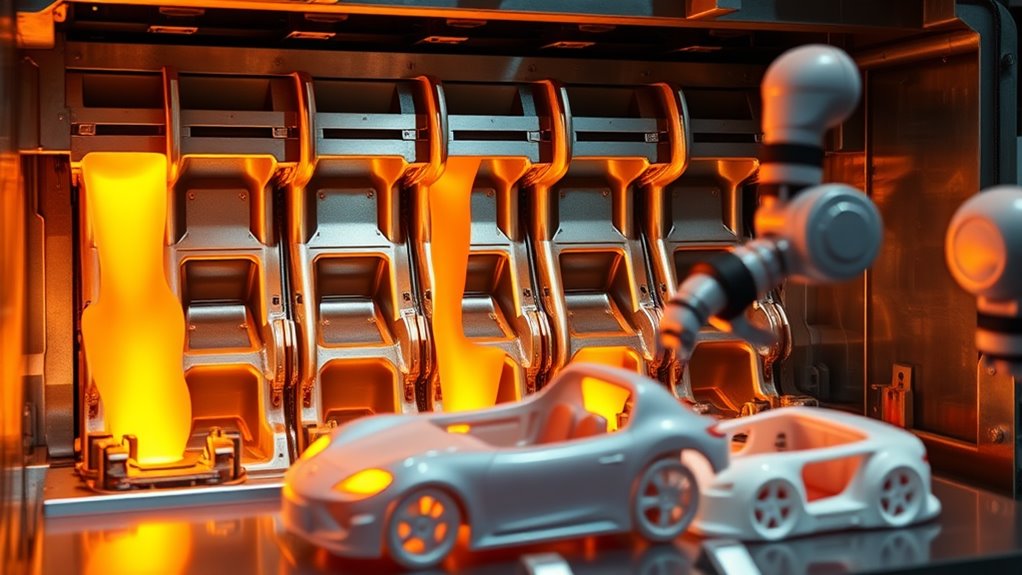
Your inspection methods should combine real-time monitoring with strategic sampling protocols.
Integrate vision systems to check for surface defects, dimensional verification tools for critical measurements, and weight checks to guarantee proper material distribution. You’ll want to establish clear accept/reject criteria and document every quality checkpoint in your process.
Advanced quality control measures now include artificial intelligence-driven systems that can predict potential defects before they occur.
By analyzing historical data patterns, these systems help you optimize process parameters proactively.
You’ll also benefit from implementing in-mold sensors that monitor pressure, temperature, and flow characteristics during each cycle.
This data-driven approach allows you to maintain tight tolerances while maximizing throughput and minimizing scrap rates in your high-volume operations.
Automated Production Systems
Modern high-volume injection molding demands sophisticated automated production systems to maintain efficiency and consistency. You’ll find that these systems integrate robotic arms, conveyor networks, and smart sensors to create a seamless production flow that minimizes human intervention and maximizes output.
The heart of automation lies in process optimization through advanced control systems. You can monitor and adjust parameters in real-time, while artificial intelligence algorithms predict maintenance needs and optimize cycle times. Robotic arms handle tasks like part removal, gate trimming, and packaging, ensuring consistent quality across millions of parts.
These systems also incorporate in-line quality checks using vision systems and laser measurements. You’re able to track each part’s journey through the production line using RFID tags and barcode systems, creating a digital thread that enables complete traceability.
The integration of Manufacturing Execution Systems (MES) with your automation controls provides detailed analytics and production metrics, helping you identify bottlenecks and improve overall equipment effectiveness. By implementing these automated solutions, you’ll achieve higher throughput rates while maintaining precise quality standards and reducing operational costs.
Plastic Mold Design Considerations
Successful automated production systems depend heavily on well-designed plastic molds. When you’re planning your high-volume production, you’ll need to take into account essential tooling specifications that guarantee consistent part quality and minimize cycle times.
Design optimization plays an important role in achieving maximum efficiency and reducing production costs. Your mold design must account for several key factors that directly impact part quality and production speed:
- Gate location and size to enhance material flow and prevent defects like weld lines or air traps
- Cooling channel layout to guarantee uniform temperature distribution and faster cycle times
- Runner system design to minimize material waste while maintaining balanced cavity filling
- Ejection system placement to facilitate clean part removal without damage or distortion
You’ll need to analyze your part geometry carefully to determine the ideal parting line location and incorporate proper draft angles. Modern simulation tools can help you verify your design choices before cutting steel, saving valuable time and resources.
Think about incorporating conformal cooling channels where possible to improve temperature control and reduce cycle times. Your mold design should also account for material shrinkage rates and potential warpage to maintain tight tolerances.
High Volume Production Planning Strategies
Planning a high-volume injection molding operation requires careful orchestration of multiple production variables. You’ll need to analyze historical data, market trends, and supply chain dynamics to establish realistic production targets. Start by implementing robust demand forecasting systems that can anticipate seasonal fluctuations and market shifts.
Your production strategy should incorporate buffer inventories of raw materials while maintaining lean operations. Develop contingency plans for potential supply chain disruptions by qualifying multiple material suppliers and establishing backup production capabilities.
You’ll want to optimize your production scheduling by calculating ideal batch sizes, considering tool changeover times, and maximizing machine utilization rates.
Consider implementing automated quality control systems and real-time monitoring to maintain consistent output across high-volume runs. You should also establish preventive maintenance schedules that align with production demands while minimizing downtime.
Factor in your warehouse capacity, shipping logistics, and inventory management systems to guarantee smooth material flow throughout the production cycle.
Track your key performance indicators, including cycle times, scrap rates, and overall equipment effectiveness, to continuously refine your production strategy and maintain competitive advantages in the market.
Conclusion
You’ll find high-volume injection molding is a complex yet rewarding manufacturing process that demands precision at every step. But isn’t that exactness what delivers millions of flawless parts? Through careful material selection, automated systems, and rigorous quality control, you’re able to achieve consistent results while maintaining cost-effectiveness. By implementing strategic production planning and optimized mold designs, you’ll maximize efficiency in your high-volume operations.